Golf Cart Camo Wrap
The right pattern scale, color contrast, and roof, seat, and wheel pairing can turn a camo cart from muddy to memorable.
Golf Cart Wraps Team · Editorial team · · 13 min read · Updated Nov 21, 2026
A golf cart camo wrap looks sharp when its pattern scale, tonal contrast and body layout work in sync. Get those three choices wrong, and tiny repeats with low-contrast colors blur into a flat brown or gray smudge before you even back out of the driveway.
Camo is one of the highest-intent wrap themes among golf cart owners, whether you are dressing a lifted four-seat hunting buggy or giving a neighborhood cruiser crisp modern facets. With AI wrap design, you do not have to hunt through generic stock rolls that never fit your vision. Type the exact camo style and palette you picture, or attach a reference photo, and see original wrap artwork mapped straight onto your 3D cart panels.
Start with how you actually use the cart and the roof, seats and wheels already mounted on it. A lifted woodland trail build and a street-legal suburban cruiser can borrow the same olive or slate tones and still call for completely different pattern shapes, scales and panel coverage.
Choose a Camo Style That Fits Your Cart
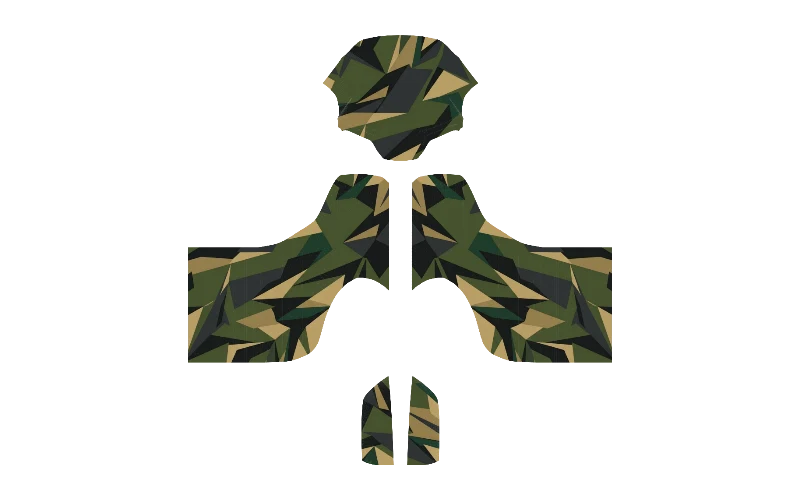
Every camo family sets a distinct personality the second someone spots your cart. Geometric camo uses bold angular polygons and sharp borders to give neighborhood cruisers a clean, athletic look. Because its crisp facets echo flat modern body lines, geometric camo looks right at home on Club Car Onward, ICON and E-Z-GO Freedom street builds.
Woodland camo trades hard angles for softer organic shapes built from matte olive, deep bark brown and charcoal. On a lifted hunting cart, lake cabin rig or ranch utility cart, broad organic silhouettes feel natural against trees, dirt trails and rugged all-terrain tires without looking forced.
Desert camo swaps woodland greens for warm khaki, sand and muted bronze brown. It pairs effortlessly with saddle tan upholstery, matte black wheels and light canopies, making it a favorite in dry southern climates and coastal golf communities where heavy dark green feels too wintery.
Tonal stealth camo keeps two or three shades close in brightness for a quiet, understated matte build, whereas snow camo pairs bright white, cool stone gray and deep charcoal for unmistakable contrast. Search data shows owners look across both classic woodland terms and broad camo wrap concepts, so previewing two styles side by side on your actual cart model quickly settles which direction fits your garage.
Think about seasonal glare and scenery before picking a camo family. Deep woodland greens hide trail dust cleanly on shaded properties, while crisp gray-and-navy geometric patterns stay sharp under bright neighborhood sun and afternoon clubhouse lights.
Semrush US keyword data, October 2026 snapshot.
| Camo style | Shape character | Best cart match | Recommended finish |
|---|---|---|---|
| Geometric camo | Large sharp polygons and crisp angles | Neighborhood cruisers and modern 4-seat carts | Matte or subtle satin |
| Woodland camo | Broad organic shapes in olive, brown and charcoal | Lifted trail, ranch and hunting carts | Matte |
| Desert camo | Warm khaki, sand and dark earth patches | Warm-climate carts with tan seats | Matte |
| Tonal stealth camo | Close dark shades like charcoal and satin black | Minimalist street builds and evening cruisers | Matte with gloss accents |
| Snow camo | Crisp white, cool gray and deep charcoal | High-contrast show builds and black-trim carts | Matte or gloss |
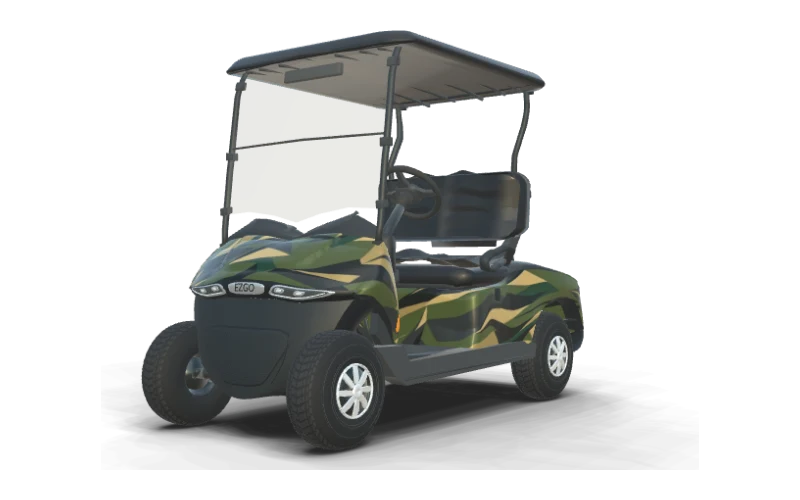
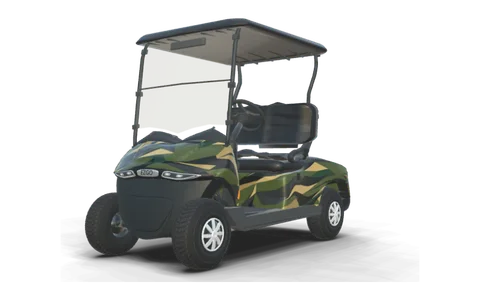
E-Z-GO RXV 2 Freedom ELiTE Lithium Wrap
Two, seats, Ocean Grey, black roof
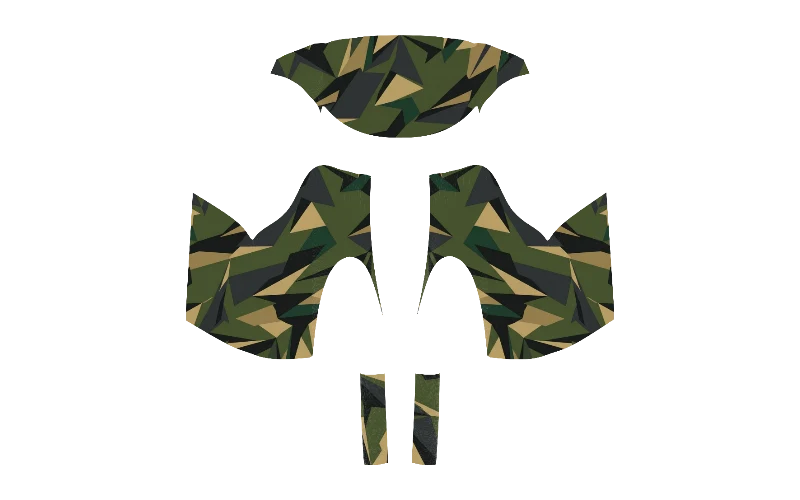
Start with Geo Camo on an E-Z-GO and study how its facets wrap across the compact front cowl and side skirts.
Pattern Scale on the Cowl and Side Skirts
Pattern scale makes or breaks camo faster than color does. A tight micro-camo repeat looks intricate when your nose is six inches from the screen, then collapses into dull static from twenty feet away as human eyes blend small shapes together. Golf cart panels are smaller than full-size pickup trucks, yet they still need shapes big enough to read cleanly across a street.
Look at the front cowl first because it offers less uninterrupted flat surface than the long side skirts. If your cowl holds only scattered confetti fragments, enlarge the graphic or regenerate with bolder shapes until three or four distinct color blocks give the front nose a clear silhouette.
Long side panels on four-passenger and six-passenger carts carry a wider horizontal sweep from the front wheel well toward the rear quarter. Large geometric facets or flowing woodland patches hold their energy over curves and rocker edges without breaking into noise. At the same time, avoid scaling the pattern so huge that an entire side panel turns into one solid green slab.
Check front, left, right and three-quarter angles at whole-cart zoom. Confirm that the front nose feels intentional, both flanks stay balanced around the wheel openings, and neither rear corner sinks into one heavy dark blotch. Shifting the wrap sheet slightly in 2D updates the live 3D cart immediately so you can dial scale by eye.
Pay extra attention to the transition around the front wheel wells and side step cutouts. Sharp geometric shards that slice right along the lower rocker line give the cart forward motion, while awkwardly cropped triangles hovering near the headlight bezel can look accidental until you nudge the layer half an inch on the flat wrap sheet.
Build a Two or Three Color Camo Palette
Great camo relies on value separation rather than packing six muddy colors into one panel. A disciplined three-color tonal split keeps shapes crisp from across a fairway: aim for roughly 55% main base tone, 30% distinct mid-tone blocks, and 15% high-contrast dark or bright separator accents that carve clean boundaries between shapes.
Two-color camo is an easy entry point when you want a sleek suburban look. Pairing matte olive with deep charcoal creates a tailored trail cart, while midnight navy and cool slate gray give urban geometric camo an athletic street vibe without shouting. Keeping the value gap obvious ensures the pattern never melts into one flat color in shade.
Three-color woodland and desert palettes add outdoor depth without sacrificing clarity. Combine matte olive (55%), warm khaki tan (30%) and deep charcoal (15%) for classic trail presence. For crisp snow camo, pair clean white (55%), cool light gray (30%) and dark charcoal (15%) so dark geometric breaks anchor the curved front nose and lower rocker edges.
Always evaluate camo colors next to the roof, seats and wheels already on your cart. If two greens look nearly identical when you zoom out to street view, push one shade lighter toward khaki or darker toward charcoal until every block separates immediately.
Watch how bright accent stripes behave inside camo, too. Many owners love adding a single thin accent color like blaze orange, muted gold or electric cyan along one edge of a dark geometric camo pattern. Keeping that bright pop under 5% of the body turns a quiet charcoal cart into an unmistakable custom build without turning it loud.
- Base tone (matte olive, white or navy)55%
- Mid-tone pattern blocks (khaki tan or cool gray)30%
- High-contrast separator (charcoal or black)15%
Color balance target that keeps individual camo shapes sharp at 20 feet instead of blending into mud.
Quick twenty-foot test: zoom the 3D cart out until it fills roughly one-quarter of your screen. If you can still count distinct shapes across the front cowl and side skirts, your camo contrast and scale are right on target.
Turn Your Camo Idea Into a Custom AI Design
Writing a strong AI camo prompt takes two plain sentences once you know the four levers: pattern family, exact color roles, shape scale and overall mood. Tell the AI explicitly whether you want sharp modern geometric shards or soft flowing woodland patches, and call out large readable shapes so it skips busy micro-speckling.
When you already love a specific hunting jacket, truck wrap or outdoor color scheme, upload a reference photo in the AI panel. Point out the exact traits you want carried over, such as broad khaki sand shapes over matte olive with charcoal borders, and the AI creates fresh original wrap artwork shaped directly to your cart panels.
Iterate cleanly by changing only one variable per run. If your first woodland generation nails the olive and tan palette yet looks too busy up front, keep the exact same colors and ask for larger shapes and a cleaner nose. Comparing two iterations side by side makes it effortless to spot whether scale or contrast needed the fix.
Use the three prompts below as ready-to-paste starting templates and swap in your preferred colors or neighborhood vibe. Every generated wrap stays in your workspace history so you can compare winners directly on your 3D cart before personalizing.
If your neighborhood leans coastal or resort-casual rather than rural woods, try swapping olive for slate blue, seafoam gray and white inside a geometric camo prompt. The angular shapes keep all the crisp energy of camo while looking right at home beside palm trees, boat docks and clubhouses.
Geometric neighborhood cruiser
Create a custom geometric camo wrap for my golf cart using large angular charcoal and midnight navy shapes with a 15% light cool gray accent. Keep the layout modern and bold with clear contrast on the front cowl and long side panels.
Produces
- A crisp urban geometric look with broad facets and clean contrast.
Pitfalls
- Thin hairline outlines disappear quickly at normal street viewing distance.
Woodland trail cart
Design a woodland camo wrap for my lifted golf cart with broad organic shapes in matte olive, khaki tan and deep charcoal. Flow the shapes cleanly along the side skirts and keep the front cowl bold enough to read from twenty feet away.
Produces
- A grounded outdoor wrap with recognizable shapes on every panel.
Pitfalls
- Olive and dark brown with similar brightness merge together in shade.
Snow camo from a reference
Use my reference photo for its snow camo palette and create original wrap artwork for my golf cart. Combine crisp white, cool gray and deep charcoal in large angular shapes, leaving a clean spot on each side for a family name.
Produces
- A high-contrast winter build with open space for personal lettering.
Pitfalls
- Busy reference photos need fewer small details so the cowl stays balanced.
Full Body Camo or a Solid Front Cowl?
Deciding how far camo should cover the cart depends on both stance and body length. Full-body camo carries your pattern across the front nose, left and right side skirts, and rear quarter for maximum visual impact from every angle. On a lifted four-passenger or six-passenger trail cart with oversized tires, full coverage matches the rugged proportions cleanly.
Pairing patterned camo sides with a solid front cowl creates a sharper, more tailored neighborhood look. Pull the cowl base color straight from your primary camo shade, such as matte olive or deep charcoal, so the front ties directly into the patterned flanks while staying calm around the headlights and front emblem.
Our 34-model 3D catalog spans 26 standard-height carts and 8 lifted trail builds across 2-passenger (15), 4-passenger (14) and 6-passenger (5) frames. Testing your camo concept on your exact seating length matters because a stretched six-seat body carries far more side surface than a compact two-seater.
Do not chase forced shape matching across every panel gap. Rotate the 3D model and judge whether scale and color weight feel consistent from front nose to rear fender; natural flow across panel boundaries always reads cleaner than cramming tiny cropped fragments near edges.
If your cart carries rear bag straps, a flip-down utility seat or a front brush guard, picture how those bolted fixtures break up the wrap silhouette. Solid dark panels behind a heavy front brush guard keep the nose clean, letting your side skirts do the visual heavy lifting from every driveway angle.
Golf Cart Wraps 3D catalog breakdown across 34 models, November 2026.
| Layout | Visual effect | Best fit when | Check in 3D |
|---|---|---|---|
| Full body camo | Pattern wraps front cowl, both sides and rear | You want rugged full-cart presence on a lifted or trail cart | Nose stays readable with balanced dark and light blocks |
| Camo sides, solid cowl | Calm front nose anchors patterned side panels | You want a cleaner neighborhood build with space for a front crest | Solid cowl pulls its exact shade from the camo palette |
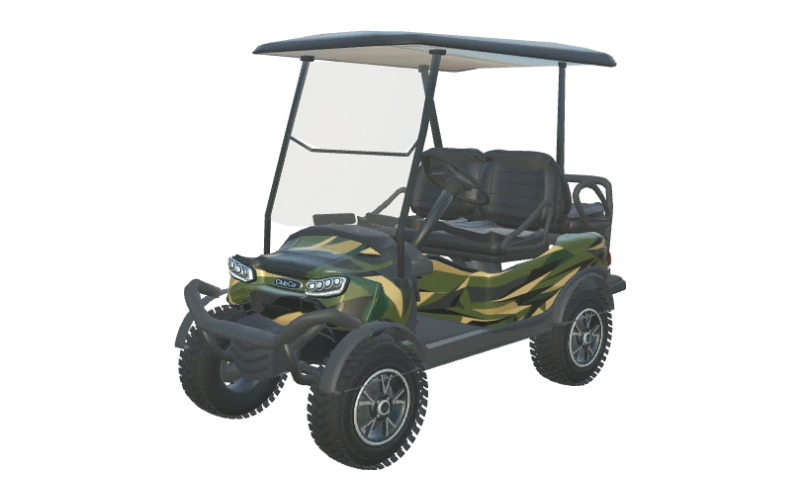
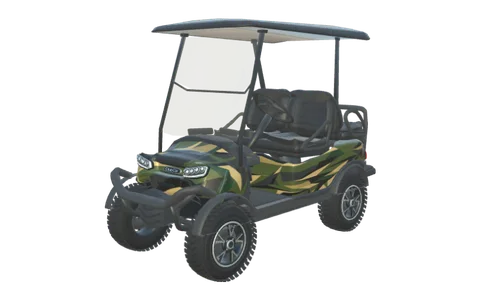
Club Car Onward Lifted 4 Passenger Wrap
Lifted,, rear-facing second row, gas, Glacier White
Preview Geo Camo on a lifted Club Car Onward and compare its longer profile against a compact two-seater.
Match the Roof, Seats, Wheels, and Windshield
Camo artwork only reaches its full potential when the canopy, seats, wheels and windshield support the same story. Because camo already carries multiple hues and broken shapes, letting surrounding hardware introduce unrelated colors quickly makes the cart feel pieced together.
A matte black canopy and black or bronze rims anchor olive woodland camo effortlessly, while saddle tan seats add warm texture that echoes khaki tones inside the wrap. On desert camo builds, a tan or cream roof blends upward cleanly while dark wheels ground the lower stance.
Windshield tint adds another powerful visual band right above the front cowl. Switching from clear glass to light smoke or dark tint locks urban geometric camo and snow camo together instantly. Pair that tinted upper band with black bumper trim or dark spokes below so the cart stays visually anchored top to bottom.
Use the hardware dock to test each part live on your 3D cart. Change one component at a time and orbit through front and side views so every accessory pulls attention back to your custom camo artwork.
Do not overlook seat piping and center cushion contrast when pairing camo with two-tone seats. Black seats with warm tan inserts connect a woodland trail wrap straight into the cabin, while charcoal cushions with subtle silver stitching echo cool stone tones inside urban geometric or snow camo builds.
Woodland trail
Matte olive and charcoal camo, black roof, saddle tan seats, bronze or black rims and a smoked windshield.
Desert cruiser
Sand and khaki camo, tan canopy, saddle tan seats, matte black wheels and a light smoke windshield.
Urban geometric
Midnight navy and gray facets, black roof, charcoal seats, matte black rims and dark windshield tint.
Snow contrast
White, cool gray and charcoal camo, black canopy, black seats, dark rims and dark windshield tint.
Compare Camo Ideas on Your Cart
Never settle on the first camo concept that looks decent in isolation. Putting two clearly different directions head to head on the exact same 3D cart with your actual roof, seats and wheels exposes strengths and flaws immediately.
Start with a wide contrast test: compare broad organic olive woodland camo against crisp navy-and-charcoal geometric facets. One usually feels natural for your property or neighborhood within five seconds, eliminating half the guesswork before you spend time fine-tuning small details.
Next, narrow in on scale by comparing two versions of your winning style: one medium pattern and one bolder oversized repeat. Keep the exact same camera angle and lighting while toggling between them so your eye measures readability on the cowl and side skirts fairly.
Finally, flip between matte and gloss finishes on the top finalist. Matte almost always wins on woodland, desert and stealth builds because it kills harsh daylight glare across the shapes, while a satin or light gloss sheen can occasionally sharpen snow or navy geometric facets.
Download free watermarked previews of your top two contenders and look at them side by side on your phone outdoors or in your garage beside the actual cart. Seeing the two builds next to your driveway lighting and existing wheels makes picking the clear winner effortless.
Names, Numbers, and Crests That Stay Legible
Camo is designed by nature to break up outlines, which means plain text or thin logos vanish fast if you drop them straight onto busy patches. Reserve a slightly calmer patch on each side panel or front cowl before adding your family name, ranch brand, hunting club crest or street number.
Smart contrast makes lettering effortless to read without enlarging it awkwardly. Crisp white letters with a thick charcoal outline cut cleanly across woodland greens and desert tans, while bold black or matte charcoal lettering with a slim white border holds sharp edges over bright snow camo.
Upload club emblems, antler crests or ranch monograms as transparent PNG files so the camo pattern hugs the true artwork silhouette with zero awkward white box behind it. Keep fine detail chunky enough to hold up when zoomed out to whole-cart viewing size.
Inspect both driver and passenger sides separately in 3D after placing text or badges. Confirm that names read left to right on both flanks, sit level with the side body crease, and stay cleanly clear of wheel arches and panel edges.
If you want your cart number on the front nose without crowding a full camo cowl, place a compact matte black or solid olive shield behind the digits. That tiny solid backdrop gives the eye an instant landing spot while keeping the surrounding camo facets clean and uninterrupted.
Inspect the Wrap Sheet and 3D Views Before HD Export
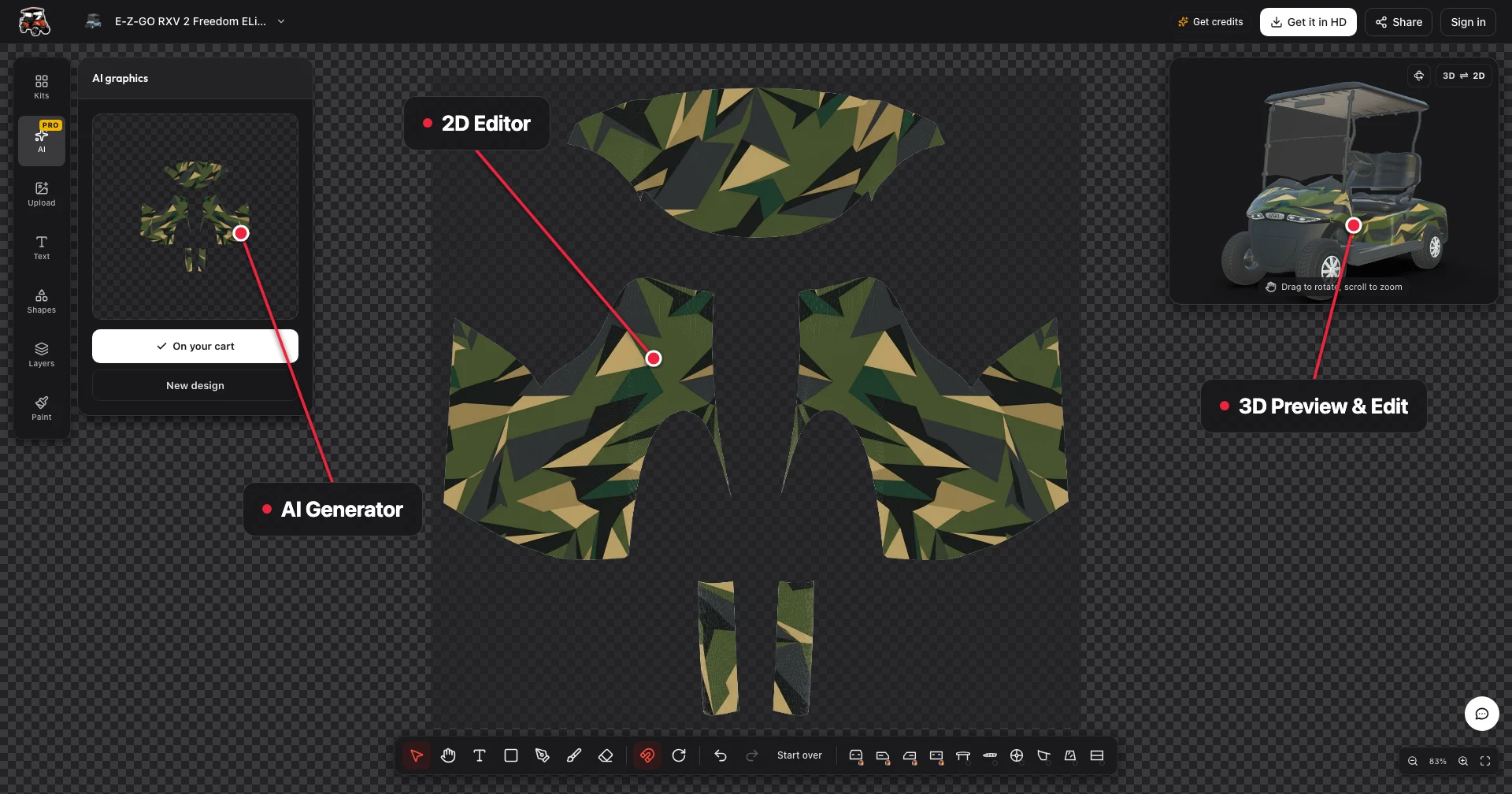
Close out your camo design by verifying both views together: the live 3D cart and the unified flat wrap sheet. The 3D model reveals overall presence, wheel clearance and hardware harmony around compound curves, while the flat sheet catches edge crops, uneven side spacing and hidden text overlaps in seconds.
Orbit completely around the cart from front, left, rear, right and overhead three-quarter views. Confirm that pattern scale looks cohesive at twenty feet, that your roof, seat piping and wheel finish tie into the camo palette, and that personal crests pop cleanly over the shapes underneath.
Switch to the flat wrap sheet and scan every panel margin carefully. Make sure no ranch crest or family name sits too tight against a cowl boundary or rear edge, then jump back to 3D after any adjustment to verify the full vehicle balance.
Once scale, contrast, hardware and personal details align cleanly across every angle, unlock the watermark-free HD export and save the build to your account. You get crisp high-resolution 3D renders plus the unified flat wrap sheet ready to keep, share or revisit anytime you want to test a new seat or wheel upgrade.
Saving two versions inside your account, such as a full-body woodland build and a calmer solid-cowl geometric build, gives you an easy way to share both links with friends or family before locking in your final favorite. Every saved file reopens directly in 3D with all layers and hardware choices intact.
- 1Pick your 3D cart stance and length
- 2Choose camo style and 55-30-15 palette
- 3Generate custom AI camo concepts
- 4Match roof, seats, wheels and tint
- 5Add high-contrast names or crests
- 6Review 3D cart, flat sheet and export in HD
Golf Cart Camo Wrap Questions
Match the camo family to where you drive. Large geometric facets look sharp on neighborhood cruisers, while broad organic woodland or desert camo fits lifted hunting, ranch and trail carts naturally.
Keep the shapes large enough to separate clearly from about twenty feet away. Zoom the 3D cart out to street distance and confirm both the compact front cowl and long side skirts show distinct blocks rather than tiny static.
Follow a 55-30-15 split using matte olive as your base, warm khaki tan for mid-tone blocks and deep charcoal for high-contrast breaks. That separation keeps shapes readable beside black canopies and tan seats.
Yes. Describe the camo style, three colors and shape scale you want, or upload a reference photo, and AI generates custom wrap artwork straight onto your 3D cart panels so you can compare variations live.
Yes. A solid matte olive, charcoal or navy front cowl keeps the nose calm for a front emblem while letting the longer side panels showcase your camo pattern.
Yes. Modern geometric camo in navy, slate gray and charcoal or tonal stealth matte black gives a street cruiser clean custom personality without looking rugged or loud.
Broad matte woodland camo in olive, khaki and charcoal paired with a black canopy, saddle tan seats, bronze or matte black rims and a smoked windshield balances tall lifted tires cleanly.
Yes. Place names or crests over a quieter zone of the pattern, use contrasting outlines around letters, and upload logos as transparent PNGs so no white background box sits over the camo.
Left and right panels mirror symmetrically, while family names, numbers and club crests must read left to right from outside on both flanks. Orbiting the 3D cart lets you verify placement cleanly.
Inspect the 3D cart at zoomed-out street distance from every side, verify roof, seat, wheel and windshield balance, and scan the flat wrap sheet for clean margins before unlocking your HD export.
Sources
- Semrush US Keyword Magic Database (golf cart camo wrap cluster, October 2026 snapshot) (accessed 2026-11-21)
- Golf Cart Wraps 3D Catalog (34 standard and lifted golf cart models) (accessed 2026-11-21)
- Club Car Onward Lifted and Standard Personal Models (accessed 2026-11-21)
- E-Z-GO Freedom RXV and Express Personal Cart Lineup (accessed 2026-11-21)
Golf Cart Wraps Team
Editorial team
We build the 3D golf cart wrap designer on this site and write practical guides on scaling patterns, placing decals and previewing panels before saving your design.
Create a camo wrap that fits your cart
Start with Geo Camo on an E-Z-GO or lifted Club Car, generate custom AI camo artwork, and export your favorite in HD.
Design My Camo Wrap